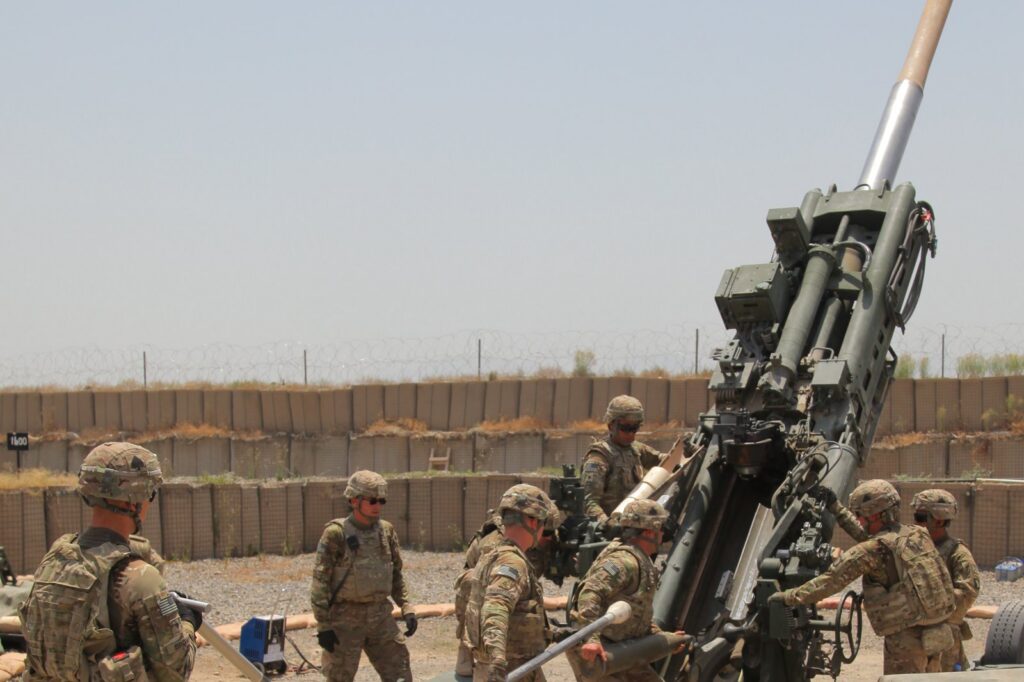
Tiberius Aerospace announced an $85 million Series A on Monday valuing the Newport Beach startup at over $1 billion, with Lakestar and Rochefort Asset Management leading the round. The raise marks the defense sector’s newest unicorn and underscores a shift where artillery is increasingly treated as a software-defined growth market rather than a traditional manufacturing play.
The Model: Defense as a Service
Tiberius operates on a “defense as a service” model that CEO Chad Steelberg explicitly compares to Apple or Nvidia. The company designs weapons with an internal engineering team of 85 staffers but does no manufacturing. Instead, it licenses intellectual property to customers who pay an initial fee, an annual subscription, and a 25 percent royalty on every unit produced. Customers retain the right to adapt designs for sovereign needs; Tiberius tests and certifies the modifications. The technical reality is a platform play: the startup controls the design authority and the data package, while a distributed network of private manufacturers — initially in the UK — handles production.
Sceptre and the Cost Curve
The flagship product, Sceptre, is an artillery round engineered for missile-like range at artillery-unit economics. Last month, Tiberius disclosed $500 million in orders for Sceptre from allied nations, a leap from its prior sole contract — a $5 million UK Ministry of Defence award for early development. The company will not disclose its share of that topline figure versus the manufacturers’ cut. Steelberg argues the valuation is unrelated to the order book, calling the contracts merely evidence that the model works and suggesting the company remains undervalued.
GRAIL: The Software Layer
The fresh capital targets two priorities: onboarding new manufacturers into the network and enhancing GRAIL, the AI-driven software platform that coordinates that network and assists weapon design. Under the hood, GRAIL functions as the connective tissue between design intent and distributed production, managing the data flows that let a startup without a factory iterate at software speed. It is the detail that matters for a business model that treats physical munitions as licensed code compiled by partners.
From Stealth to Unicorn in Months
The velocity is notable. Steelberg, a serial California entrepreneur, pivoted his research lab into a weapons business after Russia’s 2022 invasion of Ukraine. Tiberius operated in stealth until May 2025, raised a modest $4.5 million four months later, and has now cleared a billion-dollar valuation less than a year after emerging. As ever, the defense sector’s procurement cycles are long, but the market’s appetite for a software-defined approach to long-range fires has compressed the fundraising timeline to something resembling a SaaS metric.
Sources
- Defense Tech’s Newest Unicorn Wants To Be The Apple Of Artillery
- Artillery
- U.S. Army Faces Future HIMARS Training Rocket Shortage as Raytheon Advances DeepStrike JR3
- Zelenskyy Calls for Missile Parity as North Korea Sends Russia Dozens of Ballistic Missiles a Month
- U.S. Army says HIMARS engaged maritime targets during a live-fire exercise in the Marshall Islands
- Ethiopia, Eritrea exchange drone, artillery strikes
Photo: Spc. Robert Porter (Public domain)