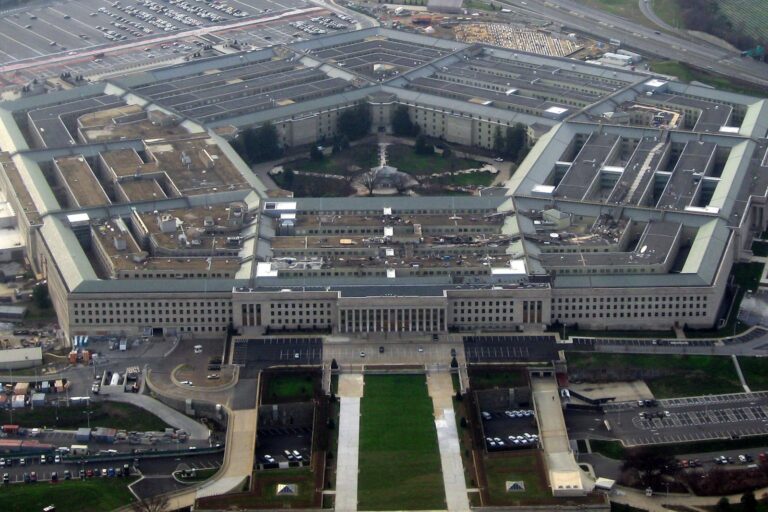
WASHINGTON, November 16, 2026 — Nvidia shares closed at $162.85 on November 13, down 32 percent from their October 6 record, as a leadership crisis collided with a broadening national security inquiry. The company announced on November 12 that Jensen Huang had resigned as chief executive amid scrutiny of his ties to a former executive at Megaspeed, a Singapore firm that rents out Nvidia chips; chief financial officer Colette Kress is now serving as interim chief executive.
The new defense contractors
NYU Stern professor Scott Galloway had already called for Huang to step down. In a clip shared on LinkedIn, he argued the episode illustrates a structural shift: companies like Nvidia and OpenAI “are the new defense contractors,” handling what he called the most sensitive material in the world. The observation carries a catch. Defense contractors answer to Washington, and Microsoft shareholders spent the 2000s discovering what that level of oversight can do to a stock.
The technical reality is that the material moving through Nvidia’s supply chain — advanced AI accelerators and the model weights they train — now sits at the center of weapons-grade sensitivity. Galloway described it as “defense level, CIA level, weapons-grade missile production” sensitivity. That classification brings a regulatory regime that the Valley has largely avoided for two decades.
Washington’s questions
Treasury Secretary Scott Bessent told CNBC on November 13 that the real story is “Did Nvidia know their client, and was there a robust effort at Nvidia to make sure that there was no leakage.” He added that decisions on Megaspeed’s access to Nvidia hardware sit with the Commerce Department’s Bureau of Industry and Security, placing Commerce Secretary Howard Lutnick at the center of the administrative response.
Lutnick has agreed to testify before the Senate Banking Committee on December 10. House Foreign Affairs Committee Chair Brian Mast says Huang has agreed to appear before Congress by Thanksgiving. Lawmakers are also pushing to attach new curbs on chip exports to China to the annual defense policy bill, which Congress typically passes by year-end. That is a heavy slate of oversight before a single new rule has been written.
The intelligence dimension
U.S. officials believe the Megaspeed executive involved in the affair was working for Chinese intelligence. The detail that matters is the timeline: the security apparatus reportedly held suspicions about the executive’s connections for months before Huang’s resignation, raising questions about whether the company was briefed on the counterintelligence risk. Galloway has asserted that the administration did not want anything to interrupt Nvidia’s share price even if it meant compromising national security; that is his assertion, not a reported finding.
Valuation reset
The market has already priced in a defense-contractor multiple. Nvidia trades at roughly 13 times forward earnings against a five-year average of 36 times and a peak of 70 times in May 2023. Analysts have barely trimmed earnings expectations — normalized EPS for fiscal 2028 still sits near $15.85, more than triple the $4.77 earned in fiscal 2026 — but the premium for unfettered growth has evaporated. The next test is Nvidia’s earnings report on November 17.
Sources
- Nvidia and OpenAI Are “the New Defense Contractors,” Says Scott Galloway. Bad News: That Means Oversight
- Nvidia and OpenAI Are “the New Defense Contractors,” Says Scott Galloway. Bad News: That Means Oversight
- Nvidia Stock Without Jensen Huang: Who Runs a $5T Company?|The Prof G Pod — BigGo Finance
- Nvidia and OpenAI Are “the New Defense Contractors,” Says Scott Galloway. Bad News: That Means Oversight
- Jensen Huang and the end of the unchecked CEO | Fortune
Photo: Anderseidesvik (CC BY-SA 4.0)