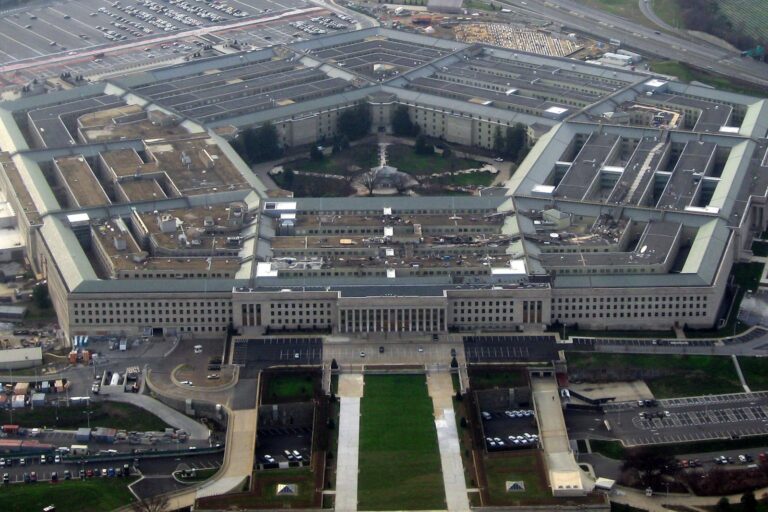
The Pentagon cannot account for 26 million F-35 parts, valued at $31 billion, according to a Government Accountability Office (GAO) report. The inventory system is described as “outdated, inaccurate, and incomplete”.
A Long-Standing Issue
This is not a new problem. The GAO has been flagging accountability issues with F-35 parts since 2019, with 26 of 34 recommendations still open as of August 2026. The F-35 program, the most expensive weapon system in U.S. history at an estimated $1.9 trillion lifecycle cost, has long been plagued by delays, cost overruns, and parts management problems.
The technical reality under the hood is a system that cannot talk directly to contractors’ systems, relying instead on quarterly data dumps. As Elaine McCusker, former acting Pentagon comptroller, puts it: “the result can be repeat buying and/or lack of parts when and where they are needed.” The detail that matters here is the lack of real-time tracking, a basic feature of modern inventory management.
Missing Parts and Diverted Shipments
In 2023, a contractor reported losing over 1 million parts worth $85 million. As of March 2026, the status of these parts remains unknown. The GAO does not name the contractor, but Lockheed Martin and Pratt & Whitney, the program’s prime contractors, have not confirmed their involvement.
More recently, a shipment of F-35 parts was diverted through Hong Kong and allegedly intercepted by China. This incident highlights the broader implications of the inventory issue: the most advanced fighter jets in U.S. history may not be ready or reliable due to these deficiencies.
Impact and Recommendations
The inability to track parts could affect F-35 warfighting capabilities and has contributed to the Pentagon’s failed financial audits. The GAO recommends building new procedures to monitor losses, developing training for property managers, and studying the property management program to determine the required number of officials.
The Pentagon has concurred with these recommendations and is working on a “live connection” between its inventory software and that of prime contractors. However, as ever, the devil is in the detail: the GAO notes that the Pentagon has made “minimal progress” on past recommendations, such as periodic physical inventories first suggested in 2022.
As of November 2026, the Pentagon is still working to establish this interface, with no clear timeline for a complete count of its F-35 parts.
Sources
- Taxpayers own $31 billion in F-35 parts. The Pentagon can’t account for them all.
- Taxpayers own $31 billion in F-35 parts but Pentagon can’t account for them all
- Pentagon ‘struggles to account for’ $31 billion in missing F-35 aircraft parts, weeks after shipment was swiped by China — tracking of estimated 26 million parts is ‘outdated, inaccurate, and incomplete,’ says watchdog
- Pentagon ‘struggles to account for’ $31 billion in missing F-35 aircraft parts, weeks after shipment was swiped by China — tracking of estimated 26 million parts is ‘outdated, inaccurate, and incomplete,’ says watchdog
- Pentagon cannot track all of its F-35 parts, watchdog says
Photo: CHUTTERSNAP / Unsplash (Unsplash License)