
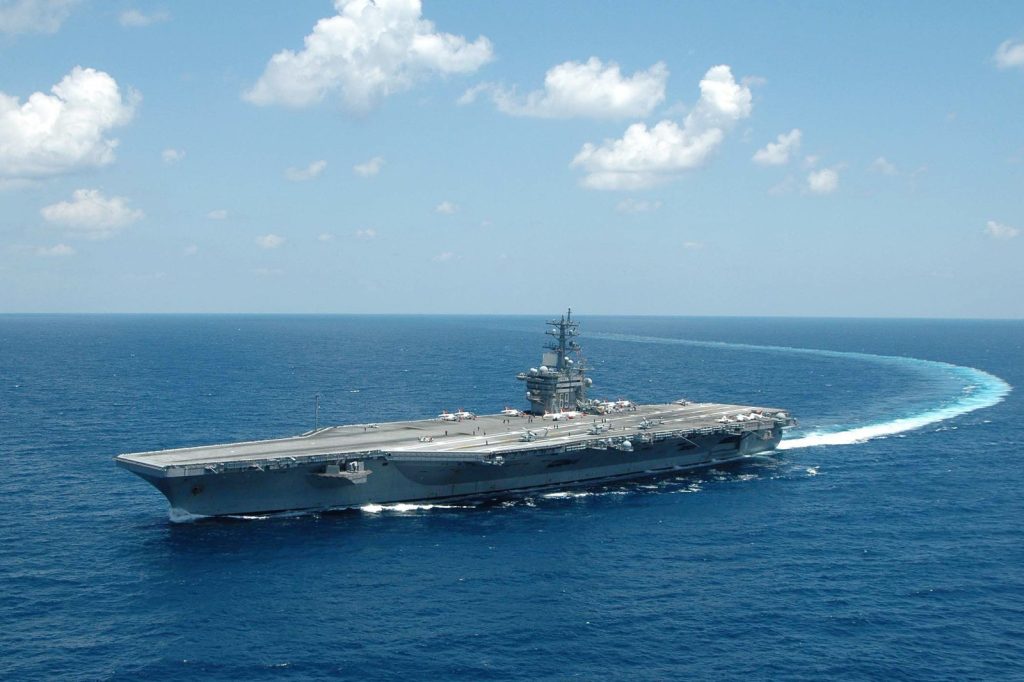
The Strait of Hormuz is open, in the sense that a pathway exists and ships are using it. Whether it is safe is another matter, and the US military is careful about what it claims. U.S. Central Command spokesman Navy Capt. Tim Hawkins said a route had been established for commercial vessels seeking to transit freely and safely, and that American forces were helping with communications and coordination along it. He was explicit that this does not amount to military escort.
How the route was proved
Hawkins said the pathway rests on a handful of transits: two Navy destroyers in April, then two U.S.-flagged commercial vessels in May. Their success showed the waterway was not, in fact, closed. The New York Times reported that the effort has since helped about 70 ships through, many with their transponders switched off to lower the risk of being spotted and attacked.
It followed Project Freedom, a U.S. initiative launched in early May to support shipping through the strait. When President Trump unveiled it, CENTCOM announced that within 12 hours two U.S.-flagged merchant ships had cleared the strait. The operation was suspended after a single day. CENTCOM rejected suggestions that the current effort revives it, saying the military routinely talks to ships in the waterway without providing dedicated escorts.
Why the traffic collapsed
The war began in late February with joint U.S.-Israeli strikes on Iran. Since then Iran has claimed control over part of the strait and reportedly demanded that ships pay a toll and coordinate with the Islamic Revolutionary Guard Corps. Tehran has also warned that it has mined parts of the passage and has launched dozens of drone and missile attacks on commercial shipping.
The numbers tell the story. The Joint Maritime Information Center counted 29 serious attacks, one minor and three attempted on ships in the Persian Gulf, the strait and the Gulf of Oman as of May 17. About 61 ships crossed in the week ending that day, against a pre-war average of 761 transits a week. Thousands of seafarers and hundreds of vessels have been stranded in the Gulf.
Mines, strikes and a shaky ceasefire
The mine question remains open. U.S. officials decline to say how many mines may lie in the strait or how they might be cleared, citing operational security. House Armed Services Committee members were told in an April classified briefing that clearing an estimated 20 or more mines could take up to six months, though a Pentagon spokesman later called that information inaccurate. Analysts point out that the count hardly matters, since the mere perception of a booby-trapped waterway keeps ships away.
Steven Wills of the Center for Maritime Strategy at the Navy League of the United States said the Navy has likely mapped a safe route using surface and underwater drones to hunt for mines. He added that destroyers, attack aircraft and helicopters could be offering “a kind of distant protection”, probably on or near the Omani side.
The ceasefire is fragile. In early May the U.S. Navy said it destroyed seven Iranian boats, and Iran claimed to have struck a U.S. Navy vessel, which the Pentagon denied. Missiles and drones also hit the UAE, including the Fujairah oil zone. Trump called the clash a “mini-war”. More recently the U.S. has struck Iranian missile sites and boats trying to lay mines, calling the strikes self-defensive. Iranian officials denounced them as a violation of the truce. On the Monday before the Stripes report, Iranian state media said Tehran had suspended talks with Washington to end the three-month war and threatened to close the strait.