
Eastern U.S. Range Fouler Debrief Raises Questions About Unidentified Aerial Phenomenon
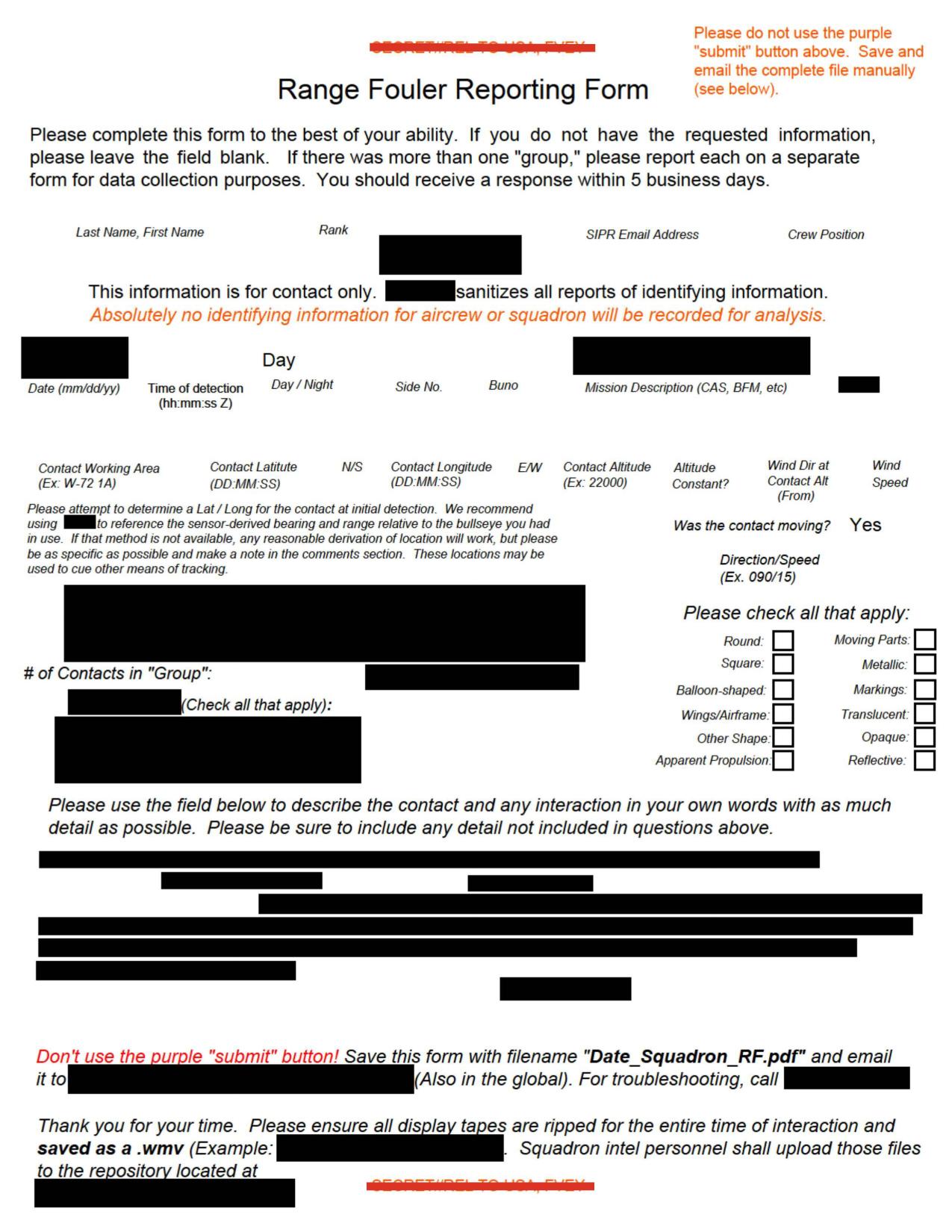
By nightfall on July 10, 2026, the U.S. military was still dissecting a report that has left even seasoned personnel scratching their heads. The document, released by the Department of War as part of the PURSUE tranche on July 10, details an encounter during a military operation in the Eastern United States on July 10, 2019. The report, labeled DOW-UAP-D090, describes an object observed by five military-affiliated personnel with “flight characteristics unlike anything [they] had seen in 28 years” of service in the Air Force or Navy.
The object, described as “small,” moved in a straight line opposite the platform’s direction at high speed. One observer noted it appeared rectangular after post-flight analysis, though the report emphasizes that all descriptions are subjective interpretations.
“Others with equal or more experience were also unsure as to what the object might be,” the report states. The lack of consensus among experienced personnel underscores the confusion surrounding the encounter. The incident occurred during a mission described as “CAS” (close air support) or “BFM” (air-to-air combat), though the exact details of the mission context remain unspecified.
The report includes timestamped data: the contact was detected at an unspecified time, with coordinates, altitude, and wind information left blank in the source. The personnel involved were instructed to leave identifying details blank to avoid analysis, a standard protocol for such reports.
The video accompanying the report, titled “DOW-UAP-PR112,” captures the moment, but the object’s speed caused it to disappear from the field of view when the operator zoomed in. What makes this case notable is the rarity of the description. The object’s rectangular shape, high-speed movement against the platform’s trajectory, and the collective uncertainty of those who witnessed it defy conventional explanations.
The report does not attribute the phenomenon to any known technology, leaving the possibility of an unidentified aerial phenomenon (UAP) open. This aligns with broader military and government efforts to catalog such events, though the Eastern U.S. incident stands out for the number of witnesses and the lack of a definitive conclusion.
The document’s release in 2026, nearly seven years after the event, reflects the Pentagon’s cautious approach to sharing information. Analysts note that Range Fouler reports like this one are often redacted or delayed to protect operational security or sensitive data. The absence of specific coordinates or altitude figures in the source material highlights the challenges of verifying such encounters. Without precise data, experts cannot rule out natural phenomena, advanced technology, or even misidentifications.
For now, the report serves as a reminder of how little is known about certain aerial anomalies. The Pentagon has not commented on the document’s release, but the fact that it was made public—albeit in a redacted form—suggests a shift in transparency.
Residents near the reported location, if any, have not been identified in the source, nor has the military disclosed the exact site of the incident. This lack of detail leaves many questions unanswered, particularly for those who witnessed the event firsthand. As the U.S. continues to grapple with reports of UAPs, this case adds another layer to the debate.
While some dismiss it as a misidentification or a prank, others argue it warrants further investigation. The military’s reliance on standardized forms like DOW-UAP-D090 ensures consistency in reporting, but it also limits the depth of analysis possible from such documents.
For Isabella Moore, the challenge lies in conveying the raw, unfiltered details of this debrief without embellishment. The story is not just about an object in the sky—it’s about the uncertainty that lingers when the unknown confronts even the most experienced observers.


